VIDEO + ARTICLE:
See results from the first large controlled trial to indicate that an intensive health program can beat the odds of Alzheimer’s. Find out by how much.
A comprehensive program providing older people at risk of dementia with healthy eating guidance, exercise, brain training, and management of metabolic and vascular risk factors appears to slow down cognitive decline, according to the first ever randomised controlled trial of its kind, published in The Lancet.
Continued below video…
In the Finnish Geriatric Intervention Study to Prevent Cognitive Impairment and Disability (FINGER) study, researchers led by Professor Miia Kivipelto from the Karolinska Institutet in Stockholm, Sweden, National Institute for Health and Welfare in Helsinki, and University of Eastern Finland, assessed the effects on brain function of a comprehensive intervention aimed at addressing some of the most important risk factors for age-related dementia, such as high body-mass index and heart health.
1260 people from across Finland, aged 60-77 years, were included in the study, with half randomly allocated to the intervention group, and half allocated to a control group, who received regular health advice only. All of the study participants were deemed to be at risk of dementia, based on standardised test scores.
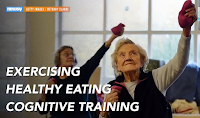
The intensive intervention consisted of regular meetings over two years with physicians, nurses, and other health professionals, with participants given comprehensive advice on maintaining a healthy diet, exercise programs including both muscle and cardiovascular training, brain training exercises, and management of metabolic and vascular risk factors through regular blood tests, and other means.
After two years, study participants’ mental function was scored using a standard test, the Neuropsychological Test Battery (NTB), where a higher score corresponds to better mental functioning. Overall test scores in the intervention group were 25% higher than in the control group. For some parts of the test, the difference between groups was even more striking — for executive functioning (the brain’s ability to organise and regulate thought processes) scores were 83% higher in the intervention group, and processing speed was 150% higher. Based on a pre-specified analysis, the intervention appeared to have no effect on patients’ memory. However, based on post-hoc analyses, there was a difference in memory scores between the intervention and control groups.
According to Professor Kivipelto, “Much previous research has shown that there are links between cognitive decline in older people and factors such as diet, heart health, and fitness. However, our study is the first large randomised controlled trial to show that an intensive program aimed at addressing these risk factors might be able to prevent cognitive decline in elderly people who are at risk of dementia.”
The study participants will now be followed for at least seven years to determine whether the diminished cognitive decline seen in this trial is followed by reduced levels of dementia and Alzheimer’s diagnoses. The researchers will also be investigating possible mechanisms whereby the intervention might affect brain function.
Source:
Reference:
- Tiia Ngandu, Jenni Lehtisalo, Alina Solomon, Esko Levälahti, Satu Ahtiluoto, Riitta Antikainen, Lars Bäckman, Tuomo Hänninen, Antti Jula, Tiina Laatikainen, Jaana Lindström, Francesca Mangialasche, Teemu Paajanen, Satu Pajala, Markku Peltonen, Rainer Rauramaa, Anna Stigsdotter-Neely, Timo Strandberg, Jaakko Tuomilehto, Hilkka Soininen, Miia Kivipelto. A 2 year multidomain intervention of diet, exercise, cognitive training, and vascular risk monitoring versus control to prevent cognitive decline in at-risk elderly people (FINGER): a randomised controlled trial. The Lancet, 2015; DOI: 10.1016/S0140-6736(15)60461-5