A revolutionary drug is showing signs of halting Alzheimer’s progression faster and safer than anything before. Could this be the turning point millions have been waiting for?
What Is Trontinemab and Why It Matters
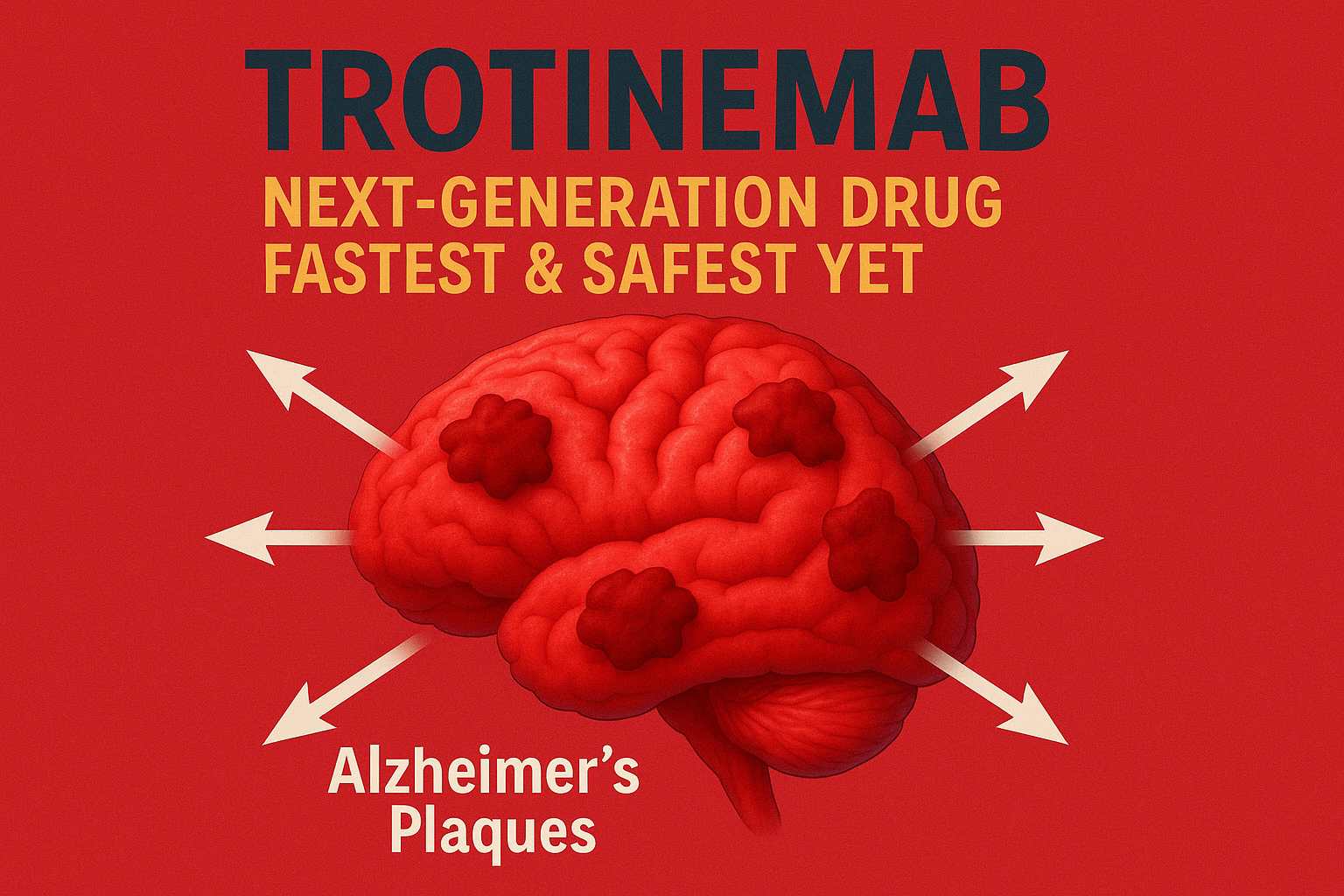
Trontinemab is an experimental Alzheimer’s drug developed by Roche that’s generating serious buzz in the medical world. Unlike older treatments, it’s designed to cross the blood-brain barrier using Roche’s proprietary Brainshuttle™ technology, allowing it to reach the brain more efficiently and clear harmful amyloid plaques.
At the Alzheimer’s Association International Conference (AAIC) 2025, Roche revealed that 91% of patients treated with trontinemab showed amyloid plaque clearance within just 28 weeks. That’s a dramatic improvement over existing drugs like Leqembi and Donanemab, which take longer and come with higher risks of side effects.
How Trontinemab Compares to Other Drugs
Here’s a quick look at how trontinemab stacks up against its competitors:
Efficacy & Safety Comparison
| Drug | Amyloid Clearance | Time to Effect | ARIA-E Risk |
|---|---|---|---|
| Trontinemab | 91% (28 weeks) | ~8 weeks | <5% |
| Leqembi | 68% (18 months) | ~6 months | ~13% |
| Donanemab | 71% (12 months) | ~3 months | ~24% |
Trontinemab’s fast action and low side effect profile make it a standout candidate for widespread use.
How It Works: The Brainshuttle Advantage
Trontinemab is a reformulated version of gantenerumab, an anti-amyloid antibody. What sets it apart is its ability to bind to transferrin receptors on brain endothelial cells, allowing it to “shuttle” across the blood-brain barrier and deliver treatment directly to the brain.
This method not only speeds up plaque clearance but also reduces the risk of amyloid-related imaging abnormalities (ARIA).
ARIA
ARIA is the single most concerning side effect in Alzheimer’s therapies. In trontinemab trials, ARIA-E occurred in less than 5% of patients and was radiographically mild.
“We’re seeing real hope. This isn’t just slowing the disease—it’s changing how we approach it.”
— Roche researcher at AAIC 2025
Phase III Trials and Early Intervention
Roche is launching TRONTIER 1 and 2, two Phase III trials targeting individuals with early symptomatic Alzheimer’s. A third trial will focus on presymptomatic individuals—those who show biomarkers but haven’t yet developed symptoms.
These trials will assess not just plaque clearance, but also cognitive function and quality of life over 18 months. The goal? To intervene before irreversible damage occurs.
Diagnostic Breakthrough: Elecsys® pTau217
Alongside trontinemab, Roche is rolling out a blood-based diagnostic test called Elecsys® pTau217. This test can detect Alzheimer’s pathology with accuracy comparable to PET scans, but at a fraction of the cost and invasiveness.
It’s already being used to screen participants for trontinemab trials and could revolutionize how Alzheimer’s is diagnosed in primary care settings.
Projected Pricing and Market Impact
While Roche hasn’t released official pricing, analysts expect trontinemab to be priced between $28,000 and $32,000 per year, similar to Leqembi and Donanemab. However, its lower dosing requirements and faster results could make it more cost-effective in the long run.
The global Alzheimer’s market is projected to hit $13.7 billion by 2030, with disease-modifying therapies like trontinemab expected to dominate over 70% of that share.
What This Means for Patients and Caregivers
Trontinemab isn’t just another drug—it represents a paradigm shift in Alzheimer’s care. By combining early diagnostics with high-efficacy treatment, Roche is building a closed-loop system: detect, treat, monitor—all with minimal invasiveness.
This could mean:
- Earlier diagnosis and intervention
- Fewer hospital visits and imaging procedures
- Better quality of life for patients and caregivers
Looking Ahead
If Phase III trials confirm the early results, trontinemab could become the first widely accessible Alzheimer’s drug with both high efficacy and a strong safety profile. It’s not just about slowing the disease—it’s about changing the trajectory of Alzheimer’s altogether.