Israel stands out among developed countries in a way that is both real and often misunderstood.
Measured on a crude, population-wide basis, Israel has the lowest dementia prevalence among several comparable Western countries—lower than Italy, the United Kingdom, and Ireland. At the same time, Israel has the highest birth rate in the developed world.
This combination is not a biological miracle. It is a demographic advantage—and understanding it correctly matters for caregivers, families, and policymakers.
What “lowest dementia prevalence” means — and why it matters
When dementia prevalence is reported as a percentage of the total population, it is called crude prevalence. This measure answers a simple question:
Out of everyone living in the country, what share has dementia right now?
Crude prevalence is heavily influenced by population age structure. Countries with more older adults—especially people in their 80s and 90s—will almost always show higher crude dementia prevalence, even if age-specific dementia risks are similar.
That is exactly what we see when comparing Israel with several European peers.
Crude dementia prevalence (2018): Israel vs. Europe
Source: Alzheimer Europe, “% of population in 2018”
Metric: Share of the total population living with dementia
| Country | Crude dementia prevalence |
|---|---|
| Israel | 0.94% |
| Ireland | 1.09% |
| United Kingdom | 1.56% |
| Italy | 2.12% |
Interpretation:
- Israel is lowest
- Italy is highest
- Ireland and the UK fall in between
This ranking closely mirrors population age structure:
- Italy has one of the oldest populations in the world
- Israel has one of the youngest among high-income countries
Israel vs. the European Union: who has the lowest crude prevalence?
Within the EU28 countries listed by Alzheimer Europe:
- Ireland has the lowest crude dementia prevalence at 1.09%
- Several countries are close (for example, Slovakia at 1.15% and Cyprus at 1.17%)
- None are lower than Ireland in the table shown
Israel’s 0.94% sits below the lowest EU figure, even though Israel is not an EU member.
That is why Israel legitimately has the best crude population-level numbers in this comparison.
Why crude prevalence is not the same as dementia risk
Crude prevalence is useful—but it is not the same as age-adjusted dementia risk.
To compare underlying risk between countries, researchers need age-standardized prevalence or incidence, which adjusts for how young or old a population is.
The Alzheimer Europe table used here is explicitly crude, not age-adjusted.
That distinction is critical.
What we can say reliably (without inventing numbers)
- Italy’s high crude prevalence (2.12%) is very likely driven substantially by its older population structure. Once age is adjusted for, Italy would move closer to other European countries.
- Israel’s low crude prevalence (0.94%) is likewise strongly influenced by its younger population. After age adjustment, Israel would move upward relative to its crude position.
- Supporting evidence from Israeli epidemiology shows that age-specific dementia prevalence in Israel resembles that of other developed countries—meaning Israel is not an outlier once you compare like-for-like ages.
In short:
Crude numbers exaggerate differences at the population level—but they do so in predictable, explainable ways.
Israel’s Numbers at a Glance
These charts explain demographic burden (crude prevalence), not biological protection or your personal dementia risk.
Crude dementia prevalence (2018) — % of total population
Interpretation: Lowest → highest (crude): Israel → Ireland → UK → Italy. This pattern is strongly consistent with population age structure.
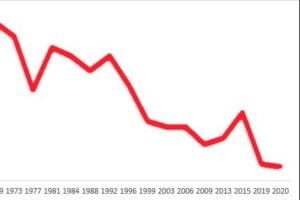
Fertility rate — average children per woman (approx.)
Higher fertility tends to keep a population younger for longer, which strongly influences crude dementia measures.
How to read these numbers
- Crude prevalence reflects demographic burden (how old the population is).
- It does not measure your personal dementia risk.
- To compare underlying risk, you need age-adjusted rates.
Bottom line: Demographics buy time — they don’t prevent dementia.
Practical takeaway for readers
Crude ranking (lowest → highest dementia prevalence):
Israel → Ireland → United Kingdom → Italy
Age-adjusted ranking:
Cannot be stated numerically from the Alzheimer Europe crude table alone. However:
- Israel would move closer to European peers after age adjustment
- Italy would also move closer to them
- The wide crude gap would narrow substantially
Both movements reflect population age structure—not data manipulation.
Why Israel’s birth rate matters in this story
Israel’s fertility rate (about 2.9 children per woman) is the highest in the developed world.
That has long-term effects:
- Fewer people are in the oldest age brackets at any given time
- The national dementia burden grows more slowly
- Health systems have more time to prepare
This is the sense in which Israel’s situation can fairly be called an unexpected blessing: demography has bought time.
Why this matters to caregivers
Caregivers do not experience averages—but averages shape systems.
Lower crude dementia prevalence gives a country:
- More capacity to shorten diagnostic delays
- More flexibility to expand home care and respite
- A better chance to invest early in caregiver training and navigation
- Time to build dementia-friendly communities before demand surges
Israel’s demographic profile offers a window of opportunity, not immunity.
What Israel can do next
Demographic advantages fade if they are not used wisely. Key priorities include:
- Earlier and more consistent cognitive detection
- Aggressive investment in risk-reduction strategies
- Expanded caregiver supports while demand is still manageable
- Better national measurement to track real trends over time
Bottom line
On a crude population basis, Israel has the lowest dementia prevalence among the countries compared—and lower than any EU country listed in the same Alzheimer Europe table.
This does not mean Israelis are biologically protected from dementia.
It does mean Israel has something rare: time.
Used well, that time can translate into better care, stronger support for caregivers, and a more prepared society as the population inevitably ages.
Caregiver Checklist
What Israel’s Dementia Numbers Mean for Caregivers
Use this checklist to turn population statistics into practical care decisions—for families and professionals alike.
☐ 1. Start cognitive tracking earlier, not later
Younger populations benefit most from early detection.
Check:
- Establish a baseline cognitive assessment in the late 60s or early 70s
- Track changes over time, not just major declines
☐ 2. Use today’s lower burden to prepare for tomorrow
Demographic advantages fade as populations age.
Check:
- Discuss long-term care, housing, and finances earlier than feels necessary
- Encourage families to plan before care becomes urgent
☐ 3. Prioritize proven, modifiable risk factors
Demography buys time; prevention determines outcomes.
Check:
- Support blood pressure control
- Manage diabetes consistently
- Address hearing loss promptly
- Encourage regular physical activity
- Maintain social connection
☐ 4. Avoid false reassurance when talking with families
Low national prevalence can unintentionally minimize real concerns.
Check:
- Reframe conversations to emphasize individual monitoring
- Acknowledge concerns even when symptoms seem mild
☐ 5. Advocate early for caregiver support services
Lower current demand creates a window for system improvement.
Check (for professionals):
- Push for respite, caregiver training, and navigation services now
- Pilot dementia-friendly programs before caseloads surge
☐ 6. Prepare caregivers emotionally for changing realities
Future caregiving needs may arrive faster than expected.
Check:
- Normalize conversations about caregiving roles early
- Encourage families to share responsibilities before crisis points
☐ 7. Use population data to strengthen—not delay—care
Statistics should support better care, not complacency.
Check:
- Use demographic data to justify prevention and early intervention
- Keep care decisions grounded in daily function and safety
☐ 8. Remember what the numbers do—and do not—measure
Crude prevalence reflects demographic burden, not lived experience.
Check:
- Focus care decisions on dignity, function, and quality of life
- Treat each person’s situation as unique, regardless of national trends