Thought of the Week: True Strength
Anyone can give up,
It’s the easiest thing in the world to do.
But to hold it together
When everyone else would understand
If you fell apart,
That’s true strength.
Anyone can give up,
It’s the easiest thing in the world to do.
But to hold it together
When everyone else would understand
If you fell apart,
That’s true strength.

Sugar, the brain, and Alzheimer’s – just how tight is their connection? Check out this update from Tulane University’s targeted study.

Women face a higher risk of Alzheimer’s. New research shows that low omega-3 levels may be a hidden factor—and boosting intake through diet or supplements could offer protection.

When memory and thinking seem a little off, people tend to avoid getting a diagnosis. Yet early diagnosis allows for early benefits. These include better planning, treatment and therapy. Learn more about the advantages revealed in an important study.

Here’s Teddy Mac and his son Simon singing Oklahoma – one of his showstoppers – from a few years ago.

This isn’t any ordinary garden! It’s home to a very special group of people living well with Alzheimer’s.
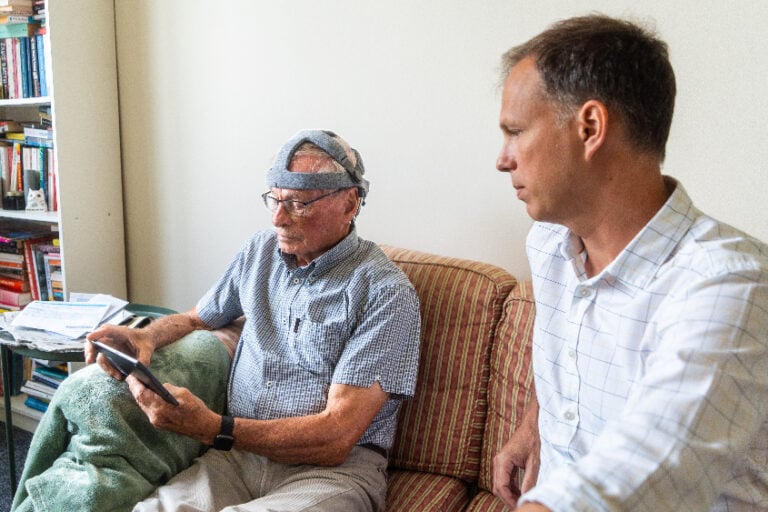
Access to Leqembi, the new Alzheimer’s drug, has been slowed by lengthy diagnoses. The “Fastball” brainwave test could change that — detecting memory decline earlier and speeding access to treatment.

PRODUCT OF THE WEEK: Caregivers love this pill box, as do patients and professionals. Simply fill it once a month. Roomy, simple, ingenious.


Caring for someone with Alzheimer’s is demanding enough. Now, instead of traveling for hours of infusions, families can turn to Leqembi IQLIK—a once-weekly injection approved by the FDA that makes treatment simpler, safer, and closer to home.

A safer Alzheimer’s treatment may be on the horizon — but families still have meaningful choices today.

The smallest act of kindness is worth more than The grandest intention. Oscar Wilde

Many diagnosed patients won’t qualify — here are the
7 medical criteria.

Enjoy this great duet between a musician with dementia and his son. A triumph of spirit over Alzheimer’s! Sing-a-long if you like!

It looks like a sneeze cannot give anyone Alzheimer’s. While Alzheimer’s abnormal disease proteins do spread from cell-to-cell, they are not “infectious”. Check out the facts.

TEEPA CARE VIDEO: Learn about Alzheimer’s 6 stages. Teepa Snow shows what to expect, while keeping the focus on the person for whom you care.

Melvyn Amrine may not have remembered the details of his life since his Alzheimer’s diagnosis, but he sure proved that his love for his wife transcended memory.