Thought of the Week: Twice the Presence
Interestingly, loving care does not require twice the time. But it does require twice the presence.

Interestingly, loving care does not require twice the time. But it does require twice the presence.

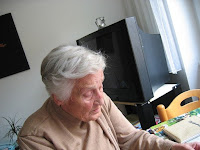
A powerful song about an 80-year-old professor losing memory due to Alzheimer’s. A tribute and a call for understanding, love, and support.

The European Union authorizes Leqembi as its very first Alzheimer’s drug to target an underlying cause of Alzheimer’s.

MEMORY PROBLEMS, an early sign of Alzheimer’s, are linked to glucose sugar deprivation in brain cells. So is diabetes, a well-known Alzheimer’s risk factor. How strongly connected is the Alzheimer’s-Sugar-Diabetes triangle?

TEEPA SNOW CARE VIDEO: Vascular dementia poses unique challenges to caregivers. Learn how vascular dementia differs from Alzheimer’s. See how to make life better, both for you and the one for whom you care.

People with dementia deserve dignity and have rights. Where do we draw the line between encouraging personal choices versus following what caregivers think is best? See Dr. Murray Raskin & Dr. Linda Teri offer experienced tips.

Heavy drinkers who have eight or more alcoholic drinks per week have increased risk of brain lesions called hyaline arteriolosclerosis, signs of brain injury that are associated with memory and thinking problems, according to a new study.

A University of California at Davis study examines how connection, through activities with horses, improves life with dementia.

Courage does not always roar.
Sometimes it is a quiet voice at the end of the day saying,
“I will try again tomorrow.”

Why can vision loss come before memory loss in 10% of Alzheimer’s? A new study shows Posterior Cortical Atrophy (PCA), a type of Alzheimer’s, distributes proteins differently.

A high-sugar diet causes insulin resistance in the brain, reducing neuronal debris removal. How badly can this increase neurodegeneration risk?

Even in later life, quitting smoking significantly reduces dementia risk.
New research published in The Lancet offers renewed hope — it’s never too late to protect your brain.

Some everyday medicines may nudge dementia risk higher — but safer, equally effective alternatives often exist. Here’s how to replace high-risk drugs with brain-friendlier options

It is one of the most beautiful Compensations of this life thatNo man can sincerely try to help anotherWithout helping himself.

What are the early symptoms of Alzheimer’s? When to get a professional evaluation.

SHORT-TERM MEMORY lapses are obvious signs of Alzheimer’s, but other tell-tale signals begin to show much earlier. Learn how to look for semantic impairments, such as simple questions about size.

Three important dementia studies focus on HS-AGING, a type of dementia almost as common as Alzheimer’s in the 85+ group. Yet few people have heard of it. Why? What makes it different?
No spam, only news and updates.