Is Sitting Bad for the Brain? Maybe Not.
Is keeping seated and sedentary, while intellectually stimulated, part of the best way to care for your brain?
Is keeping seated and sedentary, while intellectually stimulated, part of the best way to care for your brain?

Researchers say it takes a dozen “intervention sessions” to improve cognition in those at risk for Alzheimer’s and other dementias.

Don’t put that controller down just yet. Playing three-dimensional video games – besides being lots of fun – can boost the formation of memories, according to University of California neurobiologists.

Denise Medved is the founder and creator of a program that takes Alzheimer’s patients through vigorous, spirited exercise routines. She calls her program, “Ageless Grace”.

Bringing art and creativity into elder care settings helps families reconnect with loved ones who have dementia. In this moving talk, Anne Bastings shares how.
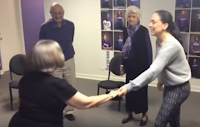
People with dementia are enjoying yoga and dance classes at the Alzheimer’s Association. See why caregivers find the classes “EXTREMELY helpful.”
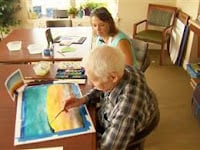
The brush strokes are precise, the colors vibrant. See a Colorado art program help patients rise above dementia, while the paintings raise money for The Alzheimer’s Association.

Did you know? Intellectual abilities are increased in the brain by an average 300% in most people ages 60-80.
Researchers find education and intellectual stimulation appear to activate a genetic program in the brain that promotes resistance to cognitive decline. Find out more.

Getting out into the fresh air and taking a walk does good things for your brain and well-being, researchers say.

CUTTING-EDGE VIDEO + ARTICLE: See Dr. Anthony Fitzpatrick use world-class cryo-electron microscopes to reveal molecular secrets leading to a cure for Alzheimer’s.
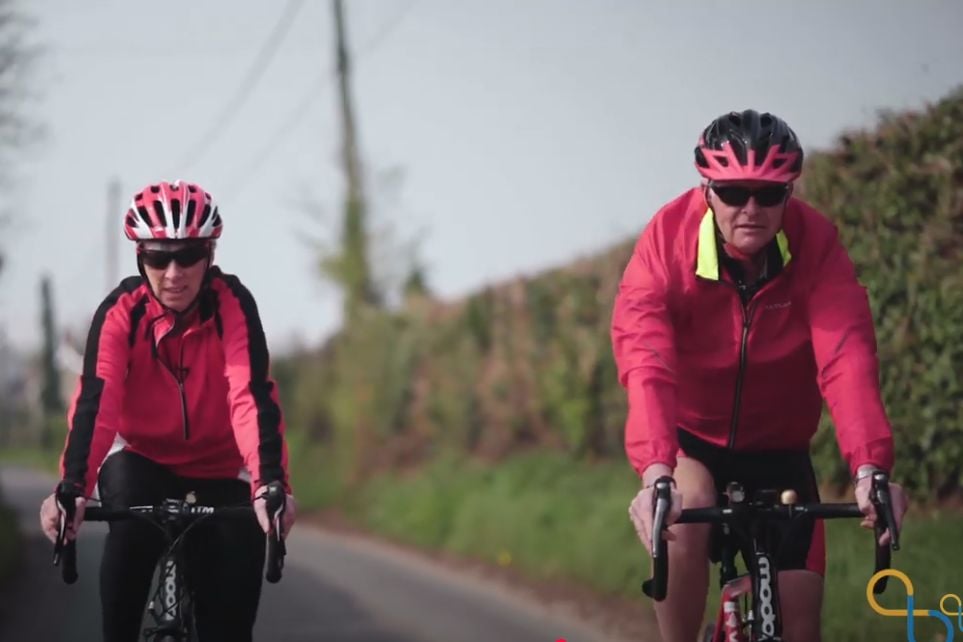
UPLIFTING VIDEO: Peter Berry & his Alzheimer’s are cycling 350 miles to show it’s still possible to live well with dementia.

Researchers found that spending time with horses — equine therapy — eases Alzheimer’s symptoms. Find out why.

Three important dementia studies focus on HS-AGING, a type of dementia almost as common as Alzheimer’s in the 85+ group. Yet few people have heard of it. Why? What makes it different?
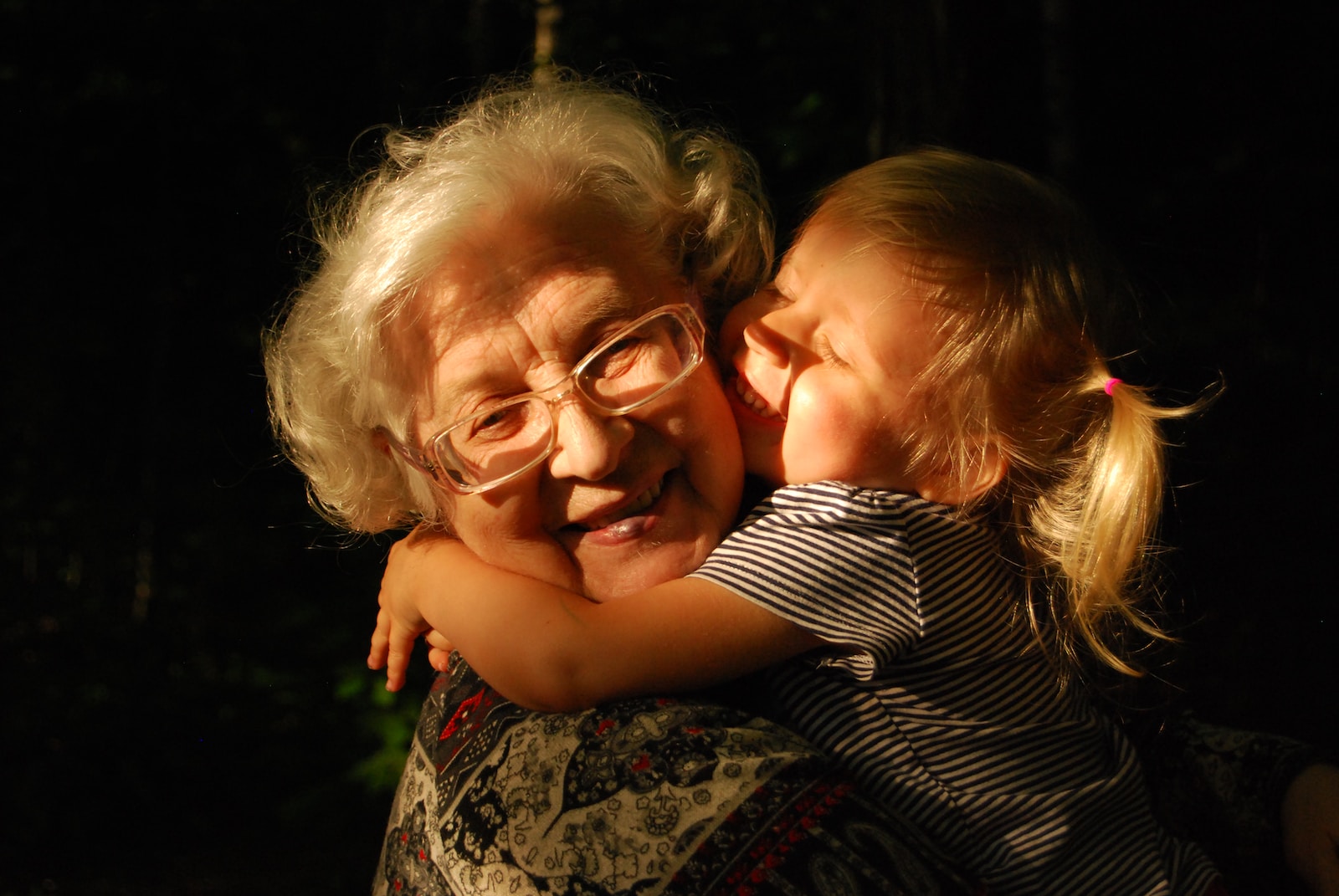
An intriguing study of 120 grandmothers might surprise you. Doctors know socially engaged people have better cognition and less dementia. But can a person get too much of a good thing? What’s the right balance?

Enjoy this great duet between a musician with dementia and his son. A triumph of spirit over Alzheimer’s! Sing-a-long if you like!

It looks like a sneeze cannot give anyone Alzheimer’s. While Alzheimer’s abnormal disease proteins do spread from cell-to-cell, they are not “infectious”. Check out the facts.