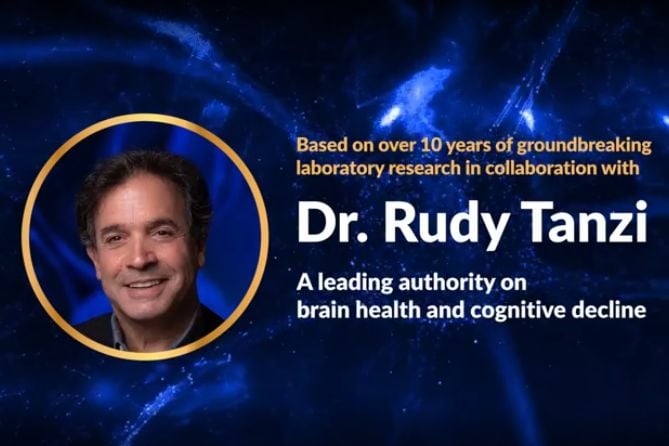
Could a Harvard-developed supplement slow cognitive aging? A new product tested on mini-brains may be the most science-backed brain health formula yet.
Harvard Neuroscience Meets Everyday Brain Health

A new supplement called CogniSHIELD™ is making waves in the brain health community. Developed in collaboration with Harvard neuroscientist Dr. Rudolph E. Tanzi, the product is the first of its kind to be tested using Alzheimer’s-in-a-Dish™—a lab-grown mini-brain model that mimics age-related changes in human neurons.
This innovative approach allowed researchers to screen over 3,500 natural compounds for their ability to reduce neuroinflammation and clear beta-amyloid, two key contributors to cognitive decline. The result? A formula containing four standout ingredients: Ipriflavone, Urolithin A, Quercetin, and Fisetin.
“We developed CogniSHIELD to reflect pharmaceutical rigor, which is unique for a dietary supplement,” said George Alex, CEO of CogniSHIELD Global.
What’s Inside CogniSHIELD?

Each of the four ingredients was chosen for its unique ability to support brain health:
- Ipriflavone: A synthetic flavonoid shown to reduce inflammation and support cellular resilience.
- Urolithin A: A compound that promotes mitochondrial health and may help clear damaged cells.
- Quercetin: A plant flavonoid with antioxidant and anti-inflammatory properties.
- Fisetin: Known for its neuroprotective effects and potential to reduce senescent cells.
Together, these ingredients form a synergistic blend aimed at slowing the natural aging process of the brain.
Why This Supplement Stands Out
Unlike many over-the-counter brain boosters, CogniSHIELD was developed using rigorous scientific methods. The Alzheimer’s-in-a-Dish™ model allowed researchers to observe how each compound affected human-like brain tissue, offering a level of insight rarely seen in supplement development.
Dr. Tanzi, who co-discovered several Alzheimer’s-related genes, emphasized that supplements are just one part of a broader brain health strategy. He recommends following the SHIELD lifestyle:
- Sleep: Prioritize quality rest.
- Handle stress: Practice mindfulness and relaxation.
- Interact: Stay socially engaged.
- Exercise: Move regularly.
- Learn: Challenge your brain.
- Diet: Eat nutrient-rich foods.
What’s Next for CogniSHIELD?

A human clinical trial is expected to begin later this year to further validate the supplement’s effectiveness. In the meantime, CogniSHIELD is available for purchase at Amazon, reduced to $74.99 from $89 for a one-month supply.
What the Research Says
The development of CogniSHIELD was informed by peer-reviewed studies on neuroinflammation, mitochondrial health, and senolytics. For example:
- Fisetin has been shown to reduce markers of brain aging in preclinical models (Maher et al., Journal of Neuroscience Research).
- Urolithin A improves mitochondrial function and may enhance memory (Ryu et al., Nature Medicine).








There are so many companies and people stating they have the answer for Alzheimer’s, Is his information truly reliable?
What can be said with certainty is that Dr. Tanzi is one of the most reputable researchers in the field of Alzheimer’s science.
so it’s never been tested on humans?
If you check out the research papers at the links provided, you will see the research elements that were performed on real people and patients.