Welcome
Alzheimer’s & Dementia Weekly was inspired by my mother’s journey with autoimmune dementia and my dad’s with Parkinson’s dementia.
Walking beside them opened my eyes to the confusion, the courage, and the deep humanity found in families and professionals caring for someone they love.
Since its debut in 2007, this site has had one clear mission:
to separate the wheat from the chaff — to highlight only the most essential articles, studies, tools, and videos from the overwhelming river of dementia-related information.
(At last count, Google receives a new post on Alzheimer’s or dementia every seven minutes.) For anyone seeking clarity or support, that constant flow can be exhausting and discouraging.
Alzheimer’s Weekly filters, translates, and explains what matters most, helping hundreds of thousands of families, clinicians, and care teams around the world make sense of the latest research and best practices.
This site is dedicated to everyone who works—often quietly and tirelessly—to preserve dignity in the community of people living with dementia.
About the Editor
With experience in dementia caregiving, public education, and Alzheimer’s-focused writing—and a professional research background shaped in what many consider one of the world’s top laboratories—I work to make complex findings clear, practical, and genuinely helpful for both families and professionals providing care.
My goal is simple:
Translate the best science into guidance that lightens the load, strengthens understanding, and helps every person with dementia live with dignity.
Peter Berger
Editor, Alzheimer’s Weekly







I admire your courage.
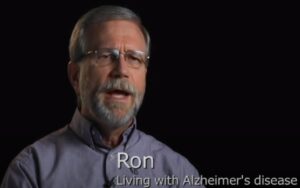
I am a nurse, and care for people with dementia. From a practioner's perspective, being diagnosed with a debilitating disease is a sad thing. I agree that a diagnosis should not become my identity, but (knowing the prognosis of Alzheimer's) I think a compassionate "oh!" is not inappropriate or shallow if my friend were to tell me she had Alzheimer's or the other way around. If all I said was, "Oh" and walked away, now that would be unkind. I think for most of us engaged in a meaningful conversation need a pause with that news. I think "Oh," for most of us, is simply a pause while our heart tries to keep in step with reality and compassion. But stay. Stay and love our friend, or me. We should resist the ironic comfort of bewilderment, and embrace the opportunity to learn and be helpful.
I agree. I cared for my mother who had Alzheimer's. But she was much older. So when someone comes in contact with a younger person with early onset, being told of the disease is not something one expects to hear. It catches them off guard. I think saying, "oh," is a perfectly normal response. What should they say? It's what happens after being told that counts.
I can understand how "Oh…" would seem like a poor response. But suddenly finding out that someone has AD is startling, to say the least. What would you prefer that people say? How would you like people to respond?
Thanks for the video. Good information and presented very well. I don't think I have Alz, so I'm speaking for those of us who don't. Your revelation that you have early onset Alz shocks (and scares )us. We need to process the information. So please be gracious if all we can say is, "Ohhh".
The words Alzheimer's and dementia are stigmatizing but then we forget the person irrespective of all the fancy speeches and literature and conference rhetoric.
I was diagnosed with early onset 9 years ago. I was 60. I am dealing with it very well too. Thanks for the video Brian. I can relate to everything you had to say.
I feel the same way. I took my early onset diagnosis very well and I am dealing with it very well.
Thank you for sharing this very interesting information, I did not realize that this disease can hit a p e Orson so young. I admire your coverage and determination. May God bless you.
Thank you for this video Brian. It's inspiring and I appreciate you bringing more awareness and making a difference in lives. Wish you well.