As a dementia silently erodes nerve cell networks in the brain, it disrupts self-referential thinking. That means a person is unable to see changes in themselves, known as anosognosia. Understanding how this condition affects getting an evaluation and making decisions allows all of us to plan for a better outcome.
The Word That Changes Everything: Anosognosia
Let’s break down this important term:
- A is a Greek prefix meaning “without” or “lack of”
- Nosos means “disease”
- Gnosia means “knowledge” or “perception”
Anosognosia literally means “lack of knowledge of the disease.” As dementia damages brain connections, it frequently disrupts the ability to make comparisons in time and space. This means a person becomes unable to see or appreciate changes in themselves. It’s not a choice; it’s a symptom of the disease itself.
Research shows that anosognosia is present in over 28% of individuals with mild Alzheimer’s disease, increasing to over 91% in more severe stages. So by the time dementia becomes severe, nearly everyone affected has lost the ability to recognize their own impairment or see how they have changed. This undermines the common thought: “I will make that decision when the time comes.”
To better understand anosognosia, it helps to understand how aging affects the brain. Our 80 billion nerve cells or neurons communicate through trillions of specialized connections called synapses. Tubular-like structures called axons can stretch long distances between neurons forming networks which allow the high-level thinking we take for granted every day.
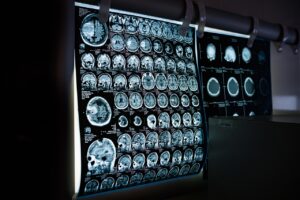
With aging, these networks begin to decay. We can easily see changes in our skin with spots on our face, arms or legs, yet are unable to see similar types of changes in our brains. A breakdown in the insulation system surrounding the axons called myelin and local inflammation leads to delayed or lost messages with more “tip of the tongue” moments. Starting in our 40s, changes in these networks within our brains can be seen as “spots” on MRI scans. If the number of these spots increases, there is damage to the communication highways connecting different brain regions, and when the networks responsible for self-awareness are disrupted, anosognosia emerges.
Should I Be Concerned?
While we can all occasionally forget a lunch meeting or the name of an acquaintance, certain changes should trigger concern.
Key warning signs include:
- Memory loss disrupting daily life: Forgetting important dates and relying more on family members to keep track of those details.
- Problems with language: Stopping mid-sentence or substituting descriptions for a word.
- Difficulty with familiar tasks: unable to organize a grocery list or manage finances as you did in the last years.
- Confusion with time or place: Forgetting where you are or how you got there.
- Poor judgment: Making unusual mistakes around money or neglecting personal hygiene.
- Withdrawal from work or social activities: Consistently absent from gatherings and losing interest in hobbies.
- Changes in mood and personality: Suspicion that others are taking things (lost items).
- Trouble understanding spatial relationships: this could be seen with driving issues and falls.
If these challenges interfere with daily life, a medical evaluation becomes essential.
Working Around the Communication Barriers
The general fear of dementia contributes to an avoidance of discussing this condition and planning a future which might contain it. And the people who most need an evaluation are often the least able to recognize that need because of anosognosia.
I recall quite clearly the unease in my heart when my mom began to miss our weekly phone calls. Then came the day at the county fair when she took our four-year-old daughter to a food booth and came back alone. But perhaps the most frustrating part for me wasn’t the memory loss itself—it was my mother’s absolute certainty that nothing was wrong.
How do we get loved ones to see a doctor when anosognosia disrupts self-awareness? We could try normalizing cognitive screening at 65-70 years of age to get a solid point for comparison later. We can also approach this as something we’re interested in for ourselves and invite our partner to join; moving focus away from the person who needs help but is unable to see it. This type of strategy can be useful in many situations.
Convincing a parent they need to move out of their old apartment could be prompted by a local mandated upgrade in windows to save energy. The “temporary” stay in assisted living while this construction goes on might drag on for months or even years due to delays in permits, construction materials… Being creative while grounded in plausible reality here can open many doors.
What You Can Do Today: Reducing Your Risk
There are numerous medical conditions that left undiagnosed and untreated can appear similar to an early dementia and increase risk of impairment. So don’t forget to ask your doctor to check for treatable conditions including small strokes, medication side effects, vitamin deficiency, thyroid disease, and sleep disorders.
And while we await more treatments, substantial research demonstrates that lifestyle interventions reduce dementia risk. Areas to concentrate on include:
- Diet: Studies show reduced dementia risk with a Mediterranean-type diet emphasizing fresh vegetables, fruits, nuts, beans, and whole grains with small amounts of fish, eggs, dairy, and meats – all minimally processed.
- Exercise: If exercise was available as a daily pill, it would be the most prescribed medication in this country. Physical activity releases beneficial proteins, triggers endorphin release, reduces inflammation, and facilitates growth of new cells in the hippocampus (our memory center). Aim for 150 minutes of a moderate activity spread throughout the week.
- Getting a good night’s sleep: During deep sleep we consolidate memories and drain waste products from our brain. Prioritize a healthy sleep routine and regular schedule.
- Social stimulation and keeping the brain engaged: Learning new things and staying connected helps keep our brains healthy.
The Promise of New Treatments
We are finally beginning to turn dementia into another chronic illness, such as heart disease. The FDA approved two new medications in 2023 and 2024; lecanemab and donanemab. These both remove abnormal amyloid fibrils or plaques which collect early in the brains of persons with Alzheimer’s Disease. Removing abnormal amyloid with these Amyloid Targeting Therapies (ATTs) can slow the course of decline in early Alzheimer’s. There are some associated risks, and as with everything in medical care we need to balance potential benefits with those risks. Evidence suggests that if these ATTs are started early, symptoms can stay mild for much longer. So adjust your attitude with a new mantra: Time lost is brain lost!
And even more tools are being studied for release. Currently, over 100 potential medications are in development targeting different pathways which all contribute to the loss of cells in a dementia. Scientists are exploring ways to prevent the accumulation of toxic proteins, suppress inflammation, support nerve cell growth, remodel synaptic connections between nerve cells and much more.
As discussed, these treatments work best in the earliest stages which is often before people recognize significant problems. This brings us back to anosognosia; the condition that can block early detection and treatment. Understanding this barrier, we are in a better position to approach evaluation, treatment, and care planning.