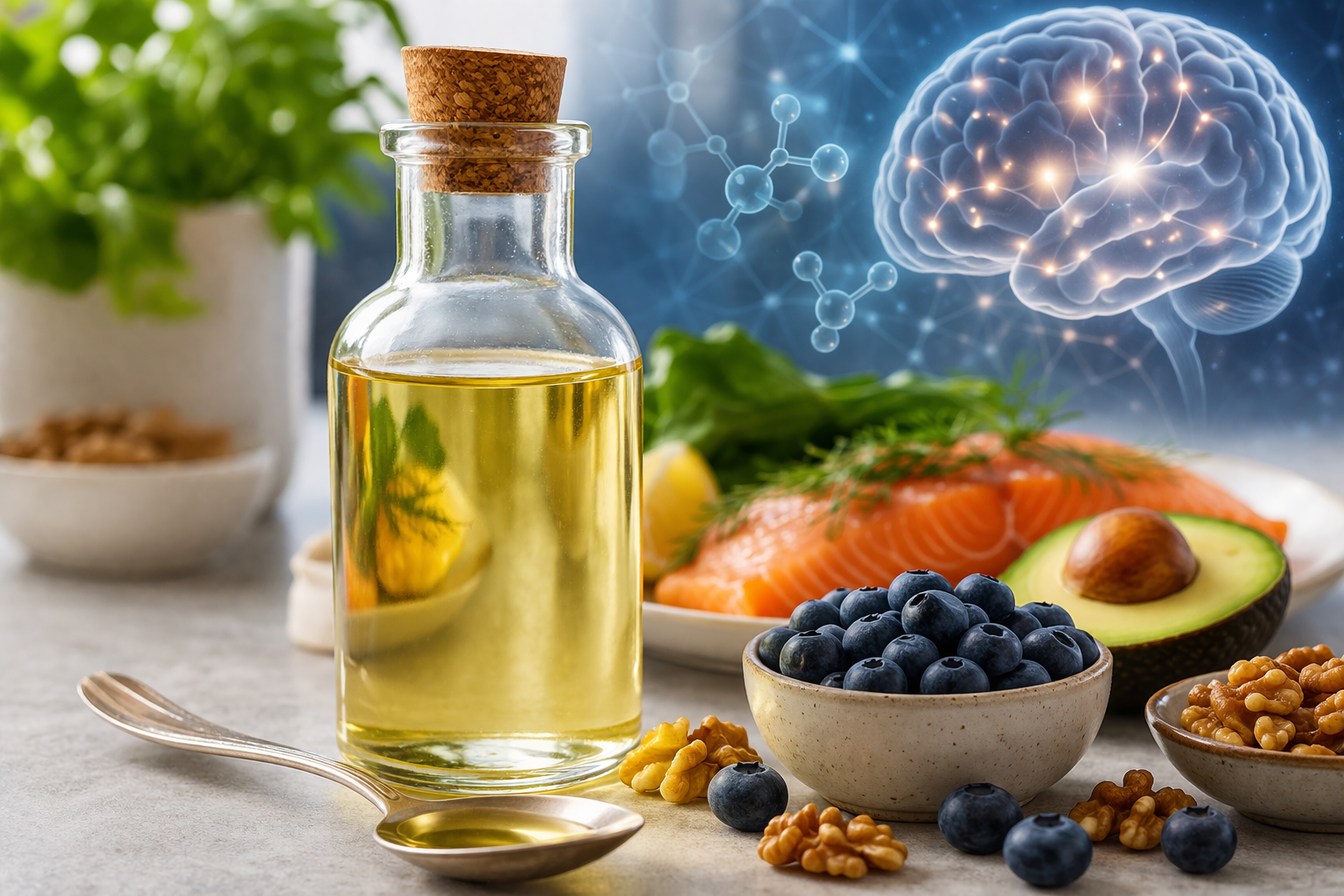
For Alzheimer’s Weekly readers following dementia research, MCT oil has remained one of the most closely followed—and increasingly researched—nutritional approaches.
Three New MCT Studies
This updated review is grounded in three newly published studies from 2025–2026 (see References & Resources below):
- a randomized placebo-controlled human trial in mild cognitive impairment,
- a new Alzheimer’s disease animal-model study in Brain, and
- a recent evidence review of MCTs in dementia-related disease.
Together, these new papers offer one of the clearest recent updates on where the science now stands.
Skepticism has been part of this conversation from the start—and understandably so, given how often dietary approaches can be overhyped.
That is exactly why these three new studies are worth a fresh look.
They do not settle the question. (Long-term clinical benefit in established Alzheimer’s disease remains under active study.) Still, they add meaningful new evidence that may help families better understand where this approach stands today.
The short answer: the research remains cautiously encouraging, especially in early cognitive decline, and it now offers practical guidance for families interested in using MCT oil as part of a broader brain-supportive diet. The newest papers point to possible benefits in three key areas, particularly in mild cognitive impairment (MCI) and in laboratory Alzheimer’s models:
- cognition
- mitochondrial function
- brain energy metabolism.
Why MCT Oil Still Draws Attention
One of the leading ideas in Alzheimer’s research is that the brain may develop a kind of energy crisis. Even before significant memory symptoms appear, the Alzheimer’s brain often shows reduced glucose uptake and metabolism. MCT oil attracts attention because it can raise ketones, which may serve as an alternate fuel source when glucose use becomes impaired. In simple terms, researchers are asking: Can MCT oil help the brain “run on backup fuel”?
What the New 2025 Human Study Found
Amazon: Diet for Alzheimer’s / Dementia
- MCT Oil
- Organic Turmeric Powder
- Omega 3 Supplements
- Diet & Alzheimer’s
- Prevention Guides
- Turmeric Curcumin Supplement
FREE! Weekly Diet Tips:
One of the most important newer human papers is a 2025 randomized double-blind, placebo-controlled trial in people with mild cognitive impairment. It reported that 12 months of MCT, DHA, and especially the combination of both significantly improved cognitive function and mitochondrial function, while also increasing blood ketone levels.
This matters because MCI is often the stage where families most want interventions that may help preserve function. An important nuance is that the combined MCT + DHA approach performed better than MCT alone. That points toward MCT oil being potentially most useful as part of a broader metabolic or nutritional strategy, rather than as a lone intervention.
What the New 2026 Research Adds
One of the most intriguing 2026 papers comes from Brain. In Alzheimer’s mouse models, researchers found that MCT supplementation improved learning, memory, and systemic metabolism.
What makes that study especially interesting is that the benefits appeared even without an increase in circulating ketone levels. That raises the possibility that MCTs may help through mechanisms beyond ketone production alone, including effects on:
- mitochondrial function
- synaptic health
- insulin signaling
- systemic metabolism
This may be one of the most scientifically interesting updates in the new research window.
Practical Guidance: How Families May Use MCT Oil Now
The newest research offers practical guidance for families who want to use MCT oil now as a complementary dietary strategy.
MCT oil has yet to be established as a stand-alone Alzheimer’s therapy. In combination therapy, the evidence is more compelling. The strongest recent human study suggests that MCT plus DHA may work better than either alone. That gives families a useful, evidence-based starting point: MCT oil may work best as part of a broader brain-supportive nutrition plan rather than by itself.
A practical food-first approach based on the latest research may include:
- Start low: 1 teaspoon daily with food
- increase slowly toward 1–2 tablespoons per day, divided across meals, if well tolerated
- pair it with DHA-rich foods, such as salmon, sardines, trout, or a physician-approved omega-3 supplement
- use it within a Mediterranean / MIND-style diet
- emphasize berries, olive oil, nuts, leafy greens, fish, eggs, and legumes
This combined approach aligns more closely with the newer evidence than using MCT oil alone. The clearest supportive signal in the latest human study came from MCT combined with DHA, not from MCT in isolation.
A Brain-Supportive Daily Example
Here is one practical example for someone with MCI or early cognitive decline:
Breakfast
Greek yogurt, blueberries, walnuts, 1 teaspoon MCT oil mixed in, and optional eggs.
Lunch
Salmon salad with olive oil, leafy greens, and avocado.
Dinner
Vegetables and legumes or fish, olive oil drizzle, and a second 1 teaspoon to 1 tablespoon MCT oil, if tolerated.
Amazon: Diet for Alzheimer’s / Dementia
- MCT Oil
- Organic Turmeric Powder
- Omega 3 Supplements
- Diet & Alzheimer’s
- Prevention Guides
- Turmeric Curcumin Supplement
FREE! Weekly Diet Tips:
This kind of pattern combines:
- ketone support
- omega-3 support
- Mediterranean-style dietary evidence
It also better reflects the direction of the newer research than treating MCT oil as a magic standalone fix.
Safety and Tolerance
It is important to start gradually. MCT oil commonly causes digestive side effects if started too quickly, including diarrhea, cramping, nausea, and loose stools. That is one reason gradual introduction makes sense in real-world use.
(Those with weight loss, digestive disorders, diabetes, or frailty should discuss this first with a physician or dietitian.)
Caregiver Takeaway
The larger question remains:
Can improving brain energy use translate into meaningful long-term cognitive preservation?
The latest research suggests scientists are still actively working on that answer.
But the strongest update from 2025–2026 is this:
MCT oil continues to show meaningful potential in early cognitive decline, especially when combined with DHA and a brain-supportive diet.










I think it would be helpful to tell us what DHA and MCT are at the very beginning of the article. Thanks. Susan