
Estrogen Hormone Therapy Inhibits Alzheimer’s Gene
Estrogen showed a protective effect in women carrying the ApoE4 gene. ApoE4 puts people at substantially increased risk for Alzheimer’s. Learn when and how estrogen may protect you.
Estrogen showed a protective effect in women carrying the ApoE4 gene. ApoE4 puts people at substantially increased risk for Alzheimer’s. Learn when and how estrogen may protect you.

See Dr. David Samati explain the important connection between the TREM2 gene and Alzheimer’s disease. Read about its significance.

Epigenomics enables us to nurture what our genes do through the way we live. Find out how MIT researchers are mastering epigenomics to beat Alzheimer’s.
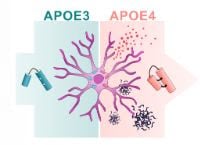
Genes PROGRESS NEWS: The most prevalent genetic risk factor of Alzheimer’s is apolipoprotein E4 (APOE4). How does this gene do its damage? A new study

Until recently, APOE-e4 was thought to be the highest-risk Alzheimer’s gene. Then, a newly discovered immune-system gene began getting even more attention. Find out why

DNA: The PHS genetic test may one day diagnose Alzheimer’s before symptoms occur. Learn how looking at genes beyond ApoE4 holds big answers to tough

PROGRESS: ApoE4 is the best known “Alzheimer’s Gene”. Gladstone Institute scientists successfully changed the gene’s structure. This eliminated certain signs of Alzheimer’s, restored normal cell

VIDEO: Dr. Gayatri Devi (Neurologist and author of The Spectrum of Hope: An Optimistic and New Approach to Alzheimer’s) explains the role of genetics in

GENETIC RESEARCH: Researchers at MIT studying the APOE4 gene are looking at choline supplements and asking whether they can offer protection against Alzheimer’s, based on
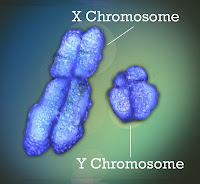
GENETICS & ALZHEIMER’S: Women’s second “X” chromosome provides them with more longevity, and researchers are finding they also have extra protection against Alzheimer’s as well,

ARTICLE + VIDEO INFOMMERCIAL: Namazaric for dementia comes in a convenient, extended-release capsule. It conveniently combines today’s 2 most popular drugs for Alzheimer’s. Learn about easy-to-manage Namazaric.

DIET: Add nuts to your meals to eat better and fight dementia. Discover three great ways nuts help your brain-boosting diet.

Dementia’s cholinesterase inhibitors can affect trips to the bathroom, according to researchers in Houston, Texas. Learn more if you take donepezil, rivastigmine or galantamine. (Brand names Adlarity, Aricept, Ebixa, Exelon, Namzaric, Razadyne)

Three important dementia studies focus on HS-AGING, a type of dementia almost as common as Alzheimer’s in the 85+ group. Yet few people have heard of it. Why? What makes it different?

An intriguing study of 120 grandmothers might surprise you. Doctors know socially engaged people have better cognition and less dementia. But can a person get too much of a good thing? What’s the right balance?

Enjoy this great duet between a musician with dementia and his son. A triumph of spirit over Alzheimer’s! Sing-a-long if you like!

It looks like a sneeze cannot give anyone Alzheimer’s. While Alzheimer’s abnormal disease proteins do spread from cell-to-cell, they are not “infectious”. Check out the facts.