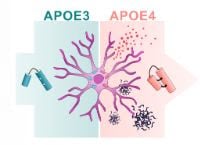
How Alzheimer’s Genes Jam Up Brain Cleanings by Immune Cells
Genes PROGRESS NEWS: The most prevalent genetic risk factor of Alzheimer’s is apolipoprotein E4 (APOE4). How does this gene do its damage? A new study
Genes PROGRESS NEWS: The most prevalent genetic risk factor of Alzheimer’s is apolipoprotein E4 (APOE4). How does this gene do its damage? A new study

VIDEO + ARTICLE: It happens unexpectedly: a person unable to recall their past or even recognize loved ones, will suddenly wake up and exhibit surprisingly

NEWS VIDEO + ARTICLE: A HIGH-SALT-DIET impaired blood flow in the brain, causing dementia-like symptoms in the lab. Can lowering the ingestion of added-salt improve

RESEARCH VIDEO + ARTICLE: Amyloid beta proteins can take on different formations when they group together, cauing neronal cell damage and inflamation. But it’s only

HOW QUICKLY your pupil dilates during cognitive tests can offer a low-cost, low-invasive screen for Alzheimer’s — even before the earliest signs. Learn how it

VIDEO + ARTICLE: Sleep is super important for the brain, but researchers have also discovered that blood flow in the brain capillaries is increased during

SLEEP VIDEO + ARTICLE: A good night’s sleep is known to clear the brain of the day’s waste. A revealing study shows how one night

PREVENTION VIDEO + ARTICLE: A mutation called APOE3 Christchurch has spared critical brain regions from the tau pathology in a woman with a family history
People buy supplements or do puzzles in hopes of protecting brain health. While they mean well, they may be ignoring solid research and missing out

PREVENTION VIDEO + ARTICLE: Reading a book, doing yoga and spending time with friends or family could help lower the risk of dementia. Find out

HEALTH VIDEO (TED TALK): What keeps brains healthy and minds happy? Dr. Robert Waldinger is directing a rare study, in its 75th year, to find out. Watch him share 3 lessons learned. See good science verify practical wisdom on healthy living.

PREVENTION VIDEOS: Learn secrets to grow old gracefully, with little dementia, from centenarians on the Greek island of Ikaria.

RECIPE: “Brain foods” are neuroprotective, fighting Alzheimer’s by lowering risk and helping to resist cognitive decline. This flavorful dish combines 4 of the best “brain foods”: fish, coconut oil, curry and fenugreek. Enjoy its Indian flair.

Three important dementia studies focus on HS-AGING, a type of dementia almost as common as Alzheimer’s in the 85+ group. Yet few people have heard of it. Why? What makes it different?

An intriguing study of 120 grandmothers might surprise you. Doctors know socially engaged people have better cognition and less dementia. But can a person get too much of a good thing? What’s the right balance?

Enjoy this great duet between a musician with dementia and his son. A triumph of spirit over Alzheimer’s! Sing-a-long if you like!

It looks like a sneeze cannot give anyone Alzheimer’s. While Alzheimer’s abnormal disease proteins do spread from cell-to-cell, they are not “infectious”. Check out the facts.