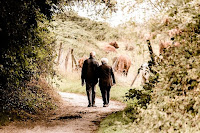
If you’re regularly out in the fresh air, you’re doing something good for both your brain and your well-being, according to researchers at the Max Planck Institute for Human Development and the Medical Center Hamburg-Eppendorf (UKE).
The findings of their longitudinal study appeared online in July 2021 in The World Journal of Biological Psychiatry.
Amazon Books & Videos
about Alzheimer’s and Dementia:
FREE Newsletter:
The study shows that the human brain benefits from even short stays outdoors. Until now, it was assumed that environments affect us only over longer periods of time.
What they did
The researchers regularly examined six healthy, middle-aged city dwellers for six months. In total, more than 280 scans were taken of their brains using magnetic resonance imaging (MRI).
The focus of the study was on self-reported behavior during the last 24 hours and in particular on the hours that participants spent outdoors prior to imaging.
In addition, they were asked about their fluid intake, consumption of caffeinated beverages, the amount of time spent outside, and physical activity, in order to see if these factors altered the association between time spent outside and the brain.
In order to be able to include seasonal differences, the duration of sunshine in the study period was also taken into account.
What they found
Brain scans show that the time spent outdoors by the participants was positively related to gray matter in the right dorsolateral-prefrontal cortex, which is the superior (dorsal) and lateral part of the frontal lobe in the cerebral cortex.
This part of the cortex is involved in the planning and regulation of actions as well as what is referred to as cognitive control. In addition, many psychiatric disorders are known to be associated with a reduction in gray matter in the prefrontal area of the brain.
The results persisted even when the other factors that could also explain the relationship between time spent outdoors and brain structure were kept constant.
The researchers performed statistical calculations in order to examine the influence of sunshine duration, number of hours of free time, physical activity, and fluid intake on the results.
The calculations revealed that time spent outdoors had a positive effect on the brain regardless of the other influencing factors.
Important to psychiatry
“Our results show that our brain structure and mood improve when we spend time outdoors. This most likely also affects concentration, working memory, and the psyche as a whole.
“We are investigating this in an ongoing study,” says Simone Kühn, head of the Lise Meitner Group for Environmental Neuroscience at the Max Planck Institute for Human Development and lead author of the study.
“The subjects are asked to also solve cognitively challenging tasks and wear numerous sensors that measure the amount of light they are exposed to during the day, among other environmental indicators.”
The results support the previously assumed positive effects of walking on health and extend them by the concrete positive effects on the brain.
Because most psychiatric disorders are associated with deficits in the prefrontal cortex, this is of particular importance to the field of psychiatry.
Future implications
“These findings provide neuroscientific support for the treatment of mental disorders. Doctors could prescribe a walk in the fresh air as part of the therapy — similar to what is customary for health cures,” says Anna Mascherek, post-doctoral fellow in the Department of Psychiatry and Psychotherapy of the Medical Center Hamburg-Eppendorf (UKE) and co-author of the study.
In the ongoing studies, the researchers also want to directly compare the effects of green environments vs urban spaces on the brain.
In order to understand where exactly the study participants spend their time outdoors, the researchers plan to use GPS (Global Positioning System) data and include other factors that may play a role such as traffic noise and air pollution.
SOURCE:
REFERENCE:
- Simone Kühn, Anna Mascherek, Elisa Filevich, Nina Lisofsky, Maxi Becker, Oisin Butler, Martyna Lochstet, Johan Mårtensson, Elisabeth Wenger, Ulman Lindenberger, Jürgen Gallinat. Spend time outdoors for your brain – an in-depth longitudinal MRI study. The World Journal of Biological Psychiatry, 2021; 1 DOI: 10.1080/15622975.2021.1938670