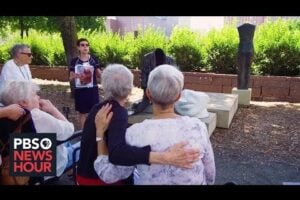
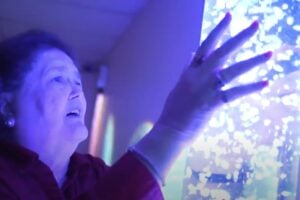
See how a pioneer ‘buddy’ program at Northwestern University pairs medical students with Alzheimer’s patients. Watch a doctor-to-be gain unique perspective from his ‘buddy’ with Alzheimer’s. See how the ‘buddies’ stay socially engaged and active.
See how a pioneer ‘buddy’ program at Northwestern University pairs medical students with Alzheimer’s patients. Watch a doctor-to-be gain unique perspective from his ‘buddy’ with Alzheimer’s. See how the ‘buddies’ stay socially engaged and active.


This site was inspired by my Mom’s autoimmune dementia.
It is a place where we separate out the wheat from the chafe, the important articles & videos from each week’s river of news. Google gets a new post on Alzheimer’s or dementia every 7 minutes. That can overwhelm anyone looking for help. This site filters out, focuses on and offers only the best information. it has helped hundreds of thousands of people since it debuted in 2007. Thanks to our many subscribers for your supportive feedback.
The site is dedicated to all those preserving the dignity of the community of people living with dementia.
Peter Berger, Editor
Share this page To

Very small things that people do can make a very big difference to people with dementia. Hear people with early dementia share their experiences, stigmas and what you can do to help create a dementia-friendly world.

New research suggests choline—a nutrient linked to memory and cognitive resilience—may help people with Alzheimer’s and at high dementia risk. Here’s why nuts, a heart-healthy and cholesterol-free food, can play a powerful role in daily dementia care.

Caring for someone with Alzheimer’s is demanding enough. Now, instead of traveling for hours of infusions, families can turn to Leqembi IQLIK—a once-weekly injection approved by the FDA that makes treatment simpler, safer, and closer to home.

TEDx BRAIN-HEALTH VIDEO: How can we take action to be mentally healthy throughout our lives? See Brain Scientist Dr. Owen Carmichael share clear, highly motivating
Visit Alzheimer's Weekly On
Alzheimer’s & Dementia Weekly was inspired by my mother’s journey with autoimmune dementia and my dad’s with Parkinson’s dementia.
Walking beside them opened my eyes to the confusion, the courage, and the deep humanity found in families and professionals caring for someone they love.
Since its debut in 2007, this site has had one clear mission:
to separate the wheat from the chaff — to highlight only the most essential articles, studies, tools, and videos from the overwhelming river of dementia-related information.
(At last count, Google receives a new post on Alzheimer’s or dementia every seven minutes.) For anyone seeking clarity or support, that constant flow can be exhausting and discouraging.
Alzheimer’s Weekly filters, translates, and explains what matters most, helping hundreds of thousands of families, clinicians, and care teams around the world make sense of the latest research and best practices.
This site is dedicated to everyone who works—often quietly and tirelessly—to preserve dignity in the community of people living with dementia.
With experience in dementia caregiving, public education, and Alzheimer’s-focused writing—and a professional research background shaped in what many consider one of the world’s top laboratories—I work to make complex findings clear, practical, and genuinely helpful for both families and professionals providing care.
My goal is simple:
Translate the best science into guidance that lightens the load, strengthens understanding, and helps every person with dementia live with dignity.
Peter Berger
Editor, Alzheimer’s Weekly
We use cookies and similar technologies to improve your experience, understand how our content is used, and support relevant advertising that helps keep Alzheimer’s Weekly free to readers. You can choose to accept, deny, or manage your preferences at any time. Declining certain cookies may affect features such as embedded videos, comments, and personalized advertising.
I was diagnosed with early onset Alzheimer's at the age of 54. I was working as a Marketing Specialist and began struggling with familiar tasks. I became a patient at Northwestern and joined a support group. I joined the "buddy" program and was so thankful for this program. My buddy was a Medical student and she became my friend and part of my family. I am sure that without that support I would not have adjusted to this diagnosis without the group and my "buddy"! I have remained active in the Alzheimer's Association. They are there for you in many ways…..including an excellent website!
Thank you for sharing your story Pati Hoffman. I am trying to learn more about dementia and Alzheimer's in order to help my mom right now, but your comments inspire me to not be more courageous and not so afraid in the future years ahead of me. God Bless you Pati for your inspiration and your posting to help us all.
Sorry, I meant "be more courageous, and not so afraid" XO