Share This Page

Choline, Nuts & Dementia: What New Studies Really Say

New research suggests choline—a nutrient linked to memory and cognitive resilience—may help people with Alzheimer’s and at high dementia risk. Here’s why nuts, a heart-healthy and cholesterol-free food, can play a powerful role in daily dementia care.
nuts

Why Choline Matters in Dementia Care

Choline is essential for producing acetylcholine, a neurotransmitter deeply involved in memory and learning. In Alzheimer’s disease, acetylcholine levels drop early and significantly. Many older adults, especially those with cognitive decline, do not get enough choline in their diets.

For caregivers, choline-rich foods offer a simple, everyday way to support the brain systems most affected by dementia.


Nuts: A Safe, Heart-Healthy Source of Brain-Supporting Choline

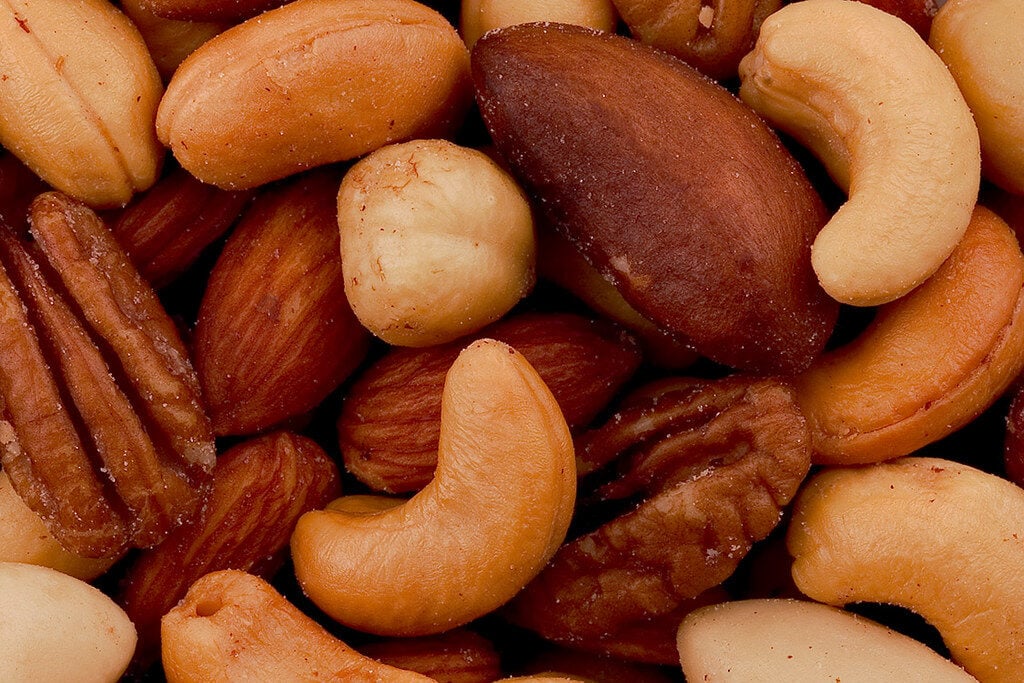
While eggs are well known for their high choline content, nuts are often overlooked—even though they provide meaningful amounts of this memory-related nutrient. Standard nutrition data show:

  • Cashews: 61 mg per 100 g
  • Almonds: 52 mg
  • Peanuts: 52 mg
  • Pine Nuts: 55 mg
  • Pistachios: 51 mg
  • Hazelnuts: 46 mg
  • Walnuts: 39 mg

These levels make nuts one of the most accessible plant-based choline sources. For people living with Alzheimer’s or at higher dementia risk, nuts offer a practical way to increase choline intake throughout the day—especially when appetite or texture needs limit other foods.


The Cholesterol Advantage: Why This Matters in Dementia

Cardiovascular health and dementia are tightly connected. Heart disease, stroke, and high LDL cholesterol all increase the risk of cognitive decline and worsen dementia outcomes.

This is where nuts shine:
they provide choline with zero cholesterol and are rich in heart-protective fats.

Eggs deliver much more choline—about 147 mg per large egg—but they also contain high levels of dietary cholesterol. For many older adults, especially those with dementia who already face elevated vascular risk, limiting dietary cholesterol is often recommended.

Nuts offer the opposite profile: a safer, cholesterol-free way to support choline intake while actually improving cardiovascular health—a major advantage in dementia care.


How Nuts Compare to Eggs for Daily Dementia Nutrition

Eggs remain the richest choline food source. Two eggs provide nearly 300 mg, a large share of daily needs.

But nuts offer two dementia-friendly benefits:

  1. They are heart-healthy, supporting vascular health—one of the strongest predictors of dementia progression.
  2. They are flexible and easy to incorporate into meals for people who need soft textures, blended foods, or small, frequent snacks.

For many caregivers, the best approach is a balanced one:

  • Use nuts and nut butters daily as a safe, reliable choline source.
  • Use eggs selectively, based on individual cholesterol goals and medical guidance.

Easy Ways to Add Choline-Rich Nuts in Dementia Care

  • Blend cashews or almonds into smoothies to add creaminess without changing flavor.
  • Mix nut butters into oatmeal, yogurt, or soft puddings.
  • Add finely chopped nuts to vegetable purees, soups, or grain dishes.
  • Offer nut spreads on soft breads or crackers for easy, nutrient-dense snacks.
  • Use ground nuts as toppings for warm cereals or mashed vegetables.
  • Create simple nut sauces for pasta, rice, or soft-cooked vegetables.

These small additions add up across the day—helping provide steady choline intake in a dementia-friendly way.


What This Means for Caregivers

Nutrition will not reverse Alzheimer’s or other dementias, but it can offer meaningful support. Nuts provide one of the simplest ways to increase choline—an essential nutrient for memory—while protecting heart health, which is crucial for slowing the progression of cognitive decline.

For families and caregivers, nuts are a gentle, safe, and versatile tool for daily nutrition that supports both the brain and the body.

Related:

Email me when people comment
Notify of
guest

0 Comments
Inline Feedbacks
View all comments
By:
Picture of Peter Berger

Peter Berger

With experience in dementia caregiving, public education, and Alzheimer’s-focused writing—and a professional research background shaped in what many consider one of the world’s top laboratories—I work to make complex findings clear, practical, and genuinely helpful for families and professionals providing care.

This site was inspired by my Mom’s autoimmune dementia.

It is a place where we separate out the wheat from the chafe, the important articles & videos from each week’s river of news. Google gets a new post on Alzheimer’s or dementia every 7 minutes. That can overwhelm anyone looking for help. This site filters out, focuses on and offers only the best information. it has helped hundreds of thousands of people since it debuted in 2007. Thanks to our many subscribers for your supportive feedback.

The site is dedicated to all those preserving the dignity of the community of people living with dementia.

Peter Berger, Editor

Share this page To

Dementia Books & Videos on Amazon:

More From Alzheimer's Weekly

Man and woman on beach
Music/Movies

Garden of Remembrance

The aptly titled ‘Garden Of Remembrance’ tells the story of a married couple dealing with the early onset of dementia and the feelings of a husband who’s “Lost between the here and now/Somewhere that he can’t be found” and his wife. Stunning, beautiful & poignant.

Read More »
Share to Facebook
Twitter
LinkedIn

Visit Alzheimer's Weekly On

Welcome

Alzheimer’s & Dementia Weekly was inspired by my mother’s journey with autoimmune dementia and my dad’s with Parkinson’s dementia.

Walking beside them opened my eyes to the confusion, the courage, and the deep humanity found in families and professionals caring for someone they love.

Since its debut in 2007, this site has had one clear mission:
to separate the wheat from the chaff — to highlight only the most essential articles, studies, tools, and videos from the overwhelming river of dementia-related information.
(At last count, Google receives a new post on Alzheimer’s or dementia every seven minutes.) For anyone seeking clarity or support, that constant flow can be exhausting and discouraging.

Alzheimer’s Weekly filters, translates, and explains what matters most, helping hundreds of thousands of families, clinicians, and care teams around the world make sense of the latest research and best practices.

This site is dedicated to everyone who works—often quietly and tirelessly—to preserve dignity in the community of people living with dementia.


About the Editor

With experience in dementia caregiving, public education, and Alzheimer’s-focused writing—and a professional research background shaped in what many consider one of the world’s top laboratories—I work to make complex findings clear, practical, and genuinely helpful for both families and professionals providing care.

My goal is simple:
Translate the best science into guidance that lightens the load, strengthens understanding, and helps every person with dementia live with dignity.

Peter Berger
Editor, Alzheimer’s Weekly

Free:
Alzheimer's & Dementia
Weekly Newsletter

INCLUDES BONUS BOOKLET:
15 Simple Things You Can Do to Care For a Loved One with Dementia or Memory Loss
News, Treatments, Care Tips, Diet, Research, Diagnosis, Therapies & Prevention
News to Get at the Truth

Subscribe To Our Weekly Newsletter

0
Would love your thoughts, please comment.x
()
x