Thought of the Week: The Best Portion
The best part of a good man’s life, His little, nameless, unremembered acts of kindness and love.

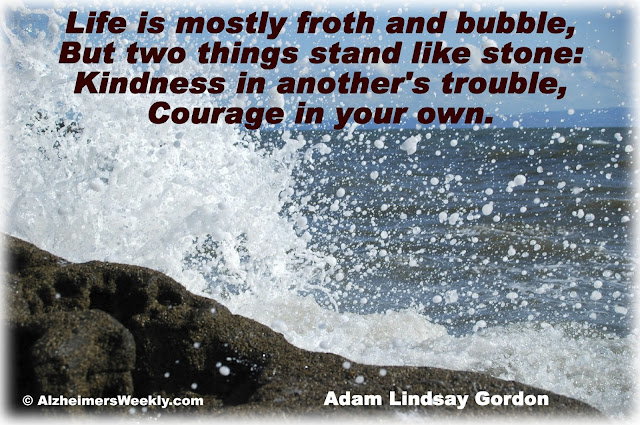
Thought of the Week: Courage in Your Own
Life is mostly froth and bubble, but 2 things stand like stone: Kindness in another’s trouble, courage in your own. (Magnets, posters, etc: – click

Thought of the Week: Fortifies Your Faith
A true friend feels your fears But fortifies your faith.

Thought of the Week: Things of the Spirit
Things of the spirit differ from things material in that, The more you give, the more you have. (T-Shirts, pillows, bags – click here)

Thought of the Week: Ripple of Kindness
Remember, there is no such thing as a small act of kindness. Every act creates a ripple with no logical end. (CafePress)
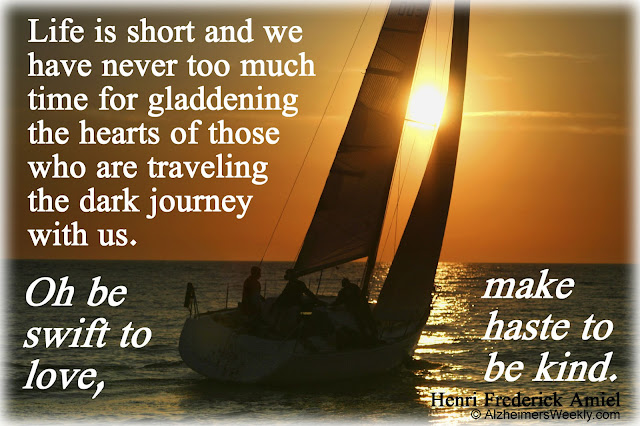
Thought of the Week: Be Swift to Love
Life is short and we have never too much time for gladdening The hearts of those who are traveling the dark journey with us. Oh!
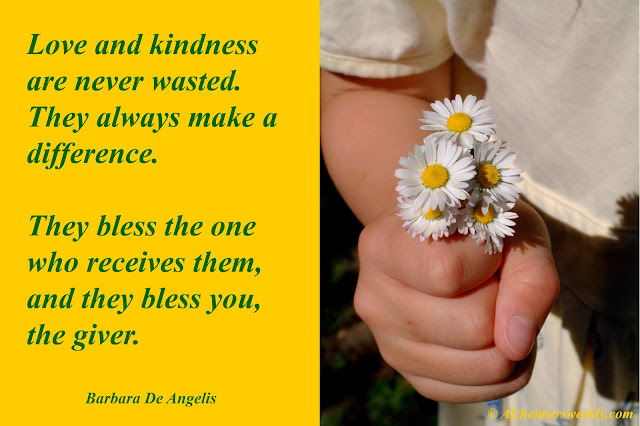
Thought of the Week: Love & Kindness Bless
Love & kindness are never wasted. They always make a difference. They bless the one who receives them, and they bless you, the giver.

Thought of the Week: Do Not Judge
Do not judge. You don’t know what storm I’ve asked her to walk through. – God

Agitation and Anxiety in Alzheimer’s
UCLA CAREGIVER TRAINING VIDEO: Agitation and anxiety create resistance in people with Alzheimer’s and frustration for their caregivers. Learn techniques to solve and resolve these difficult moments.

Dementia Alert: Alzheimer’s a Cold-Weather Danger
WEATHER ALERT – 9 WAYS TO STAY SAFE WITH DEMENTIA: People can lose body heat fast. That’s called hypothermia. Big chills and Alzheimer’s are a dangerous combination. Learn 9 ways to stay safe in cold weather.

Trip to the 1940’s Eases Alzheimer’s Symptoms
Desi has Alzheimer’s. She lives in a dementia facility with a 1940’s “Retro” living room and kitchen. Old-time music helps residents remember bygone days. It’s reminiscence as therapy. See it in action.

85 with Dementia? Good Chance It’s HS-AGING, Not Alzheimer’s
Three important dementia studies focus on HS-AGING, a type of dementia almost as common as Alzheimer’s in the 85+ group. Yet few people have heard of it. Why? What makes it different?
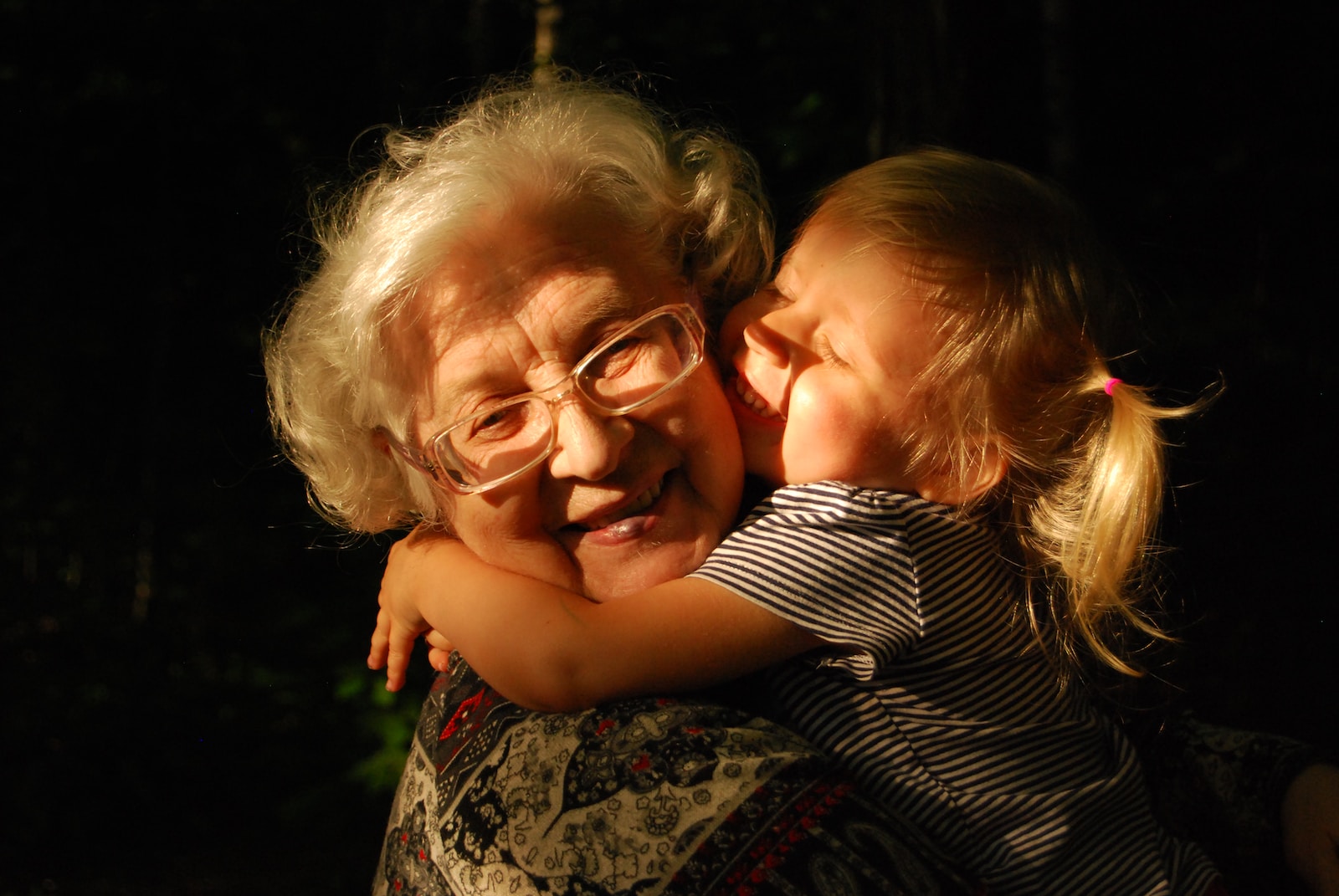
A Grandchild for One Day Keeps Dementia Away
An intriguing study of 120 grandmothers might surprise you. Doctors know socially engaged people have better cognition and less dementia. But can a person get too much of a good thing? What’s the right balance?
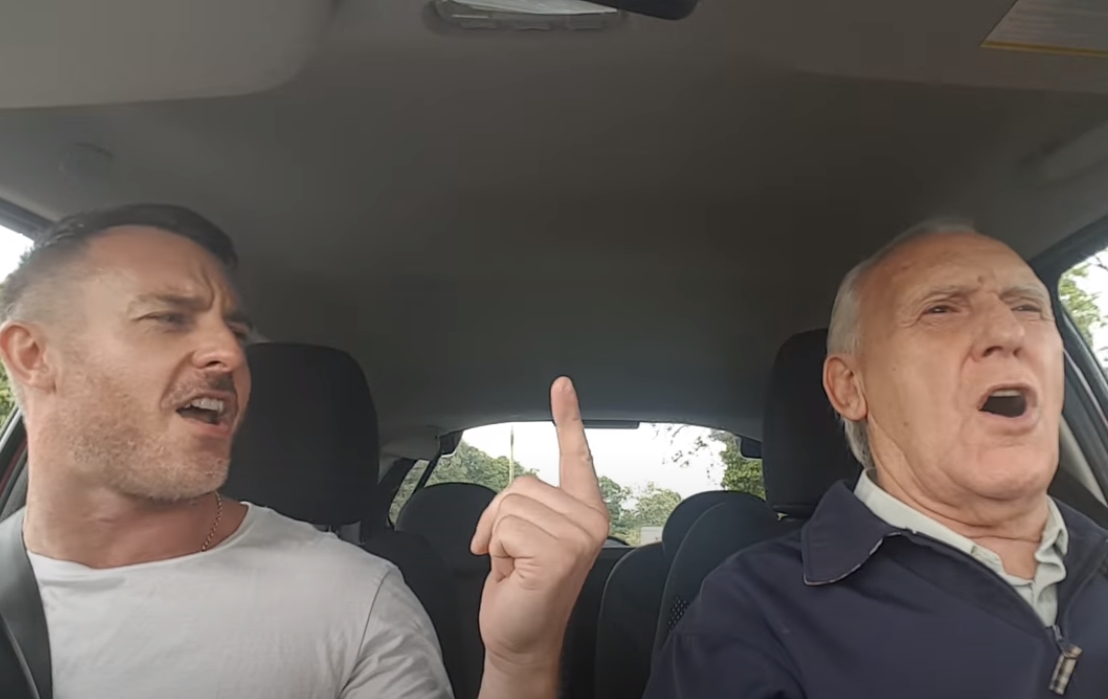
“I’ve Got You Under My Skin,” By Dad with Dementia & Son
Enjoy this great duet between a musician with dementia and his son. A triumph of spirit over Alzheimer’s! Sing-a-long if you like!
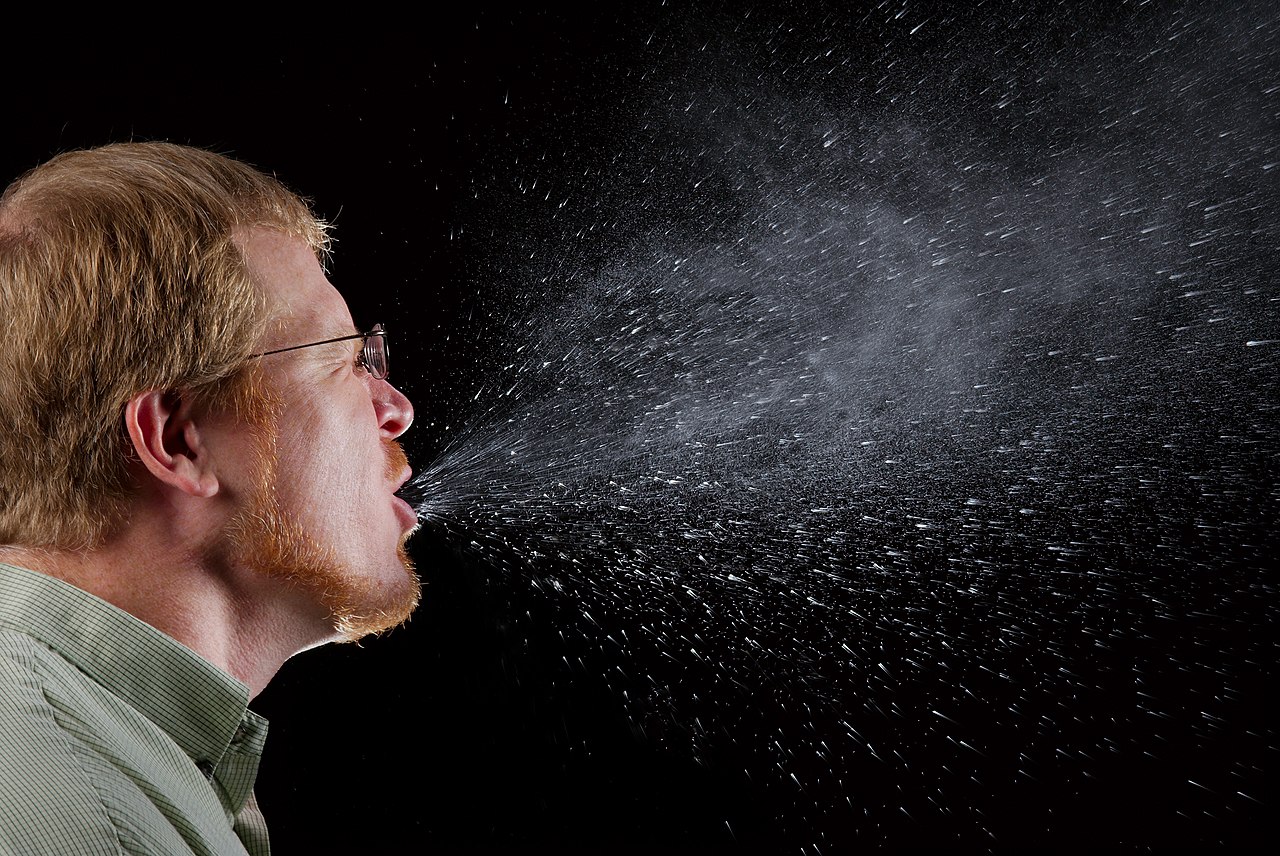
Is Alzheimer’s Catchy?
It looks like a sneeze cannot give anyone Alzheimer’s. While Alzheimer’s abnormal disease proteins do spread from cell-to-cell, they are not “infectious”. Check out the facts.

Designing Rooms for Dementia
FREE 32-PAGE BOOK: Dementia design improves the independence of people with dementia. This online book is available at no charge.…

Care-Partner Journal for Alzheimer's & Dementia
Print this free 10-page booklet. Brookdale Care Programs offers helpful hints, practical suggestions, checklists and tables to ease your journey…

'Still Alice' Brings Attention to Alzheimer's
In turns heartbreaking and inspiring, the movie "Still Alice" captures in remarkable detail what's it's like to live with Alzheimer's.

How to Long-Distance Caregive
FREE BOOKLETS & CARE TIPS: Long-distance dementia-caregiving has unique stresses. Learn what to do and how to help. Get free…

8 Ways Caregivers Care for Themselves
TIPS, INFO + FREE HANDBOOK: Caring for dementia can cause caregiver burnout, endangering both patient & caregiver. Learn 8 ways…

50-Page Free Book on Lewy Body Dementia
FREE LBD BOOK, by America's NIH. Insights into caregiving, movement, sleep & behavior. Often misdiagnosed as Alzheimer's or Parkinson's, 1…

Spectrum of Hope: Living Better with Alzheimer's
(VIDEO) BOOK-OF-THE-WEEK: Dr. Gayatri Devi, Neurologist at NY's Lenox Hill Hospital, released "The Spectrum of Hope: An Optimistic and New…

6 Ways Dementia Caregivers Can Feel Less Guilty
VIDEO & TRANSCRIPT: Caregiving is loving, yet frustrations can trigger guilt. See Dr. Peter Rabins, author of the #1 dementia…

Reverse Dementia in Normal Pressure Hydrocephalus
DIAGNOSIS (VIDEO & TRANSCRIPT): 5% of Alzheimer's cases may really be NPH (Normal Pressure Hydrocephalus), a curable dementia. 400,000 Americans…

20 Home Safety Tips for Alzheimer's
20 TIPS + NIH HOME SAFETY CHECKLIST FOR ALZHEIMER'S: Here are 20 ways to make your home a safer place…