Share This Page

Creamy Lentil and Carrot Mash

A soft, easy-to-chew meal combining cooked lentils and carrots with olive oil and mild spices for brain-healthy nutrients, perfect for caregivers preparing meals for older adults.
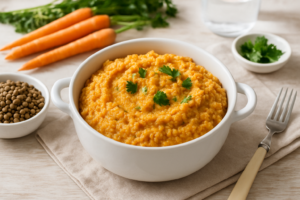
Creamy Lentil and Carrot Mash

A simple MIND Diet recipe built around everyday ingredients that support a brain-healthy eating pattern.
Brain Care Score: 68 / 100

A practical Alzheimer’s Weekly score based on MIND-style ingredients and limits on less brain-friendly ingredients.

Why it scores well:

  • Includes beans or lentils
  • Uses olive oil

This is an editorial nutrition guide, not medical advice.

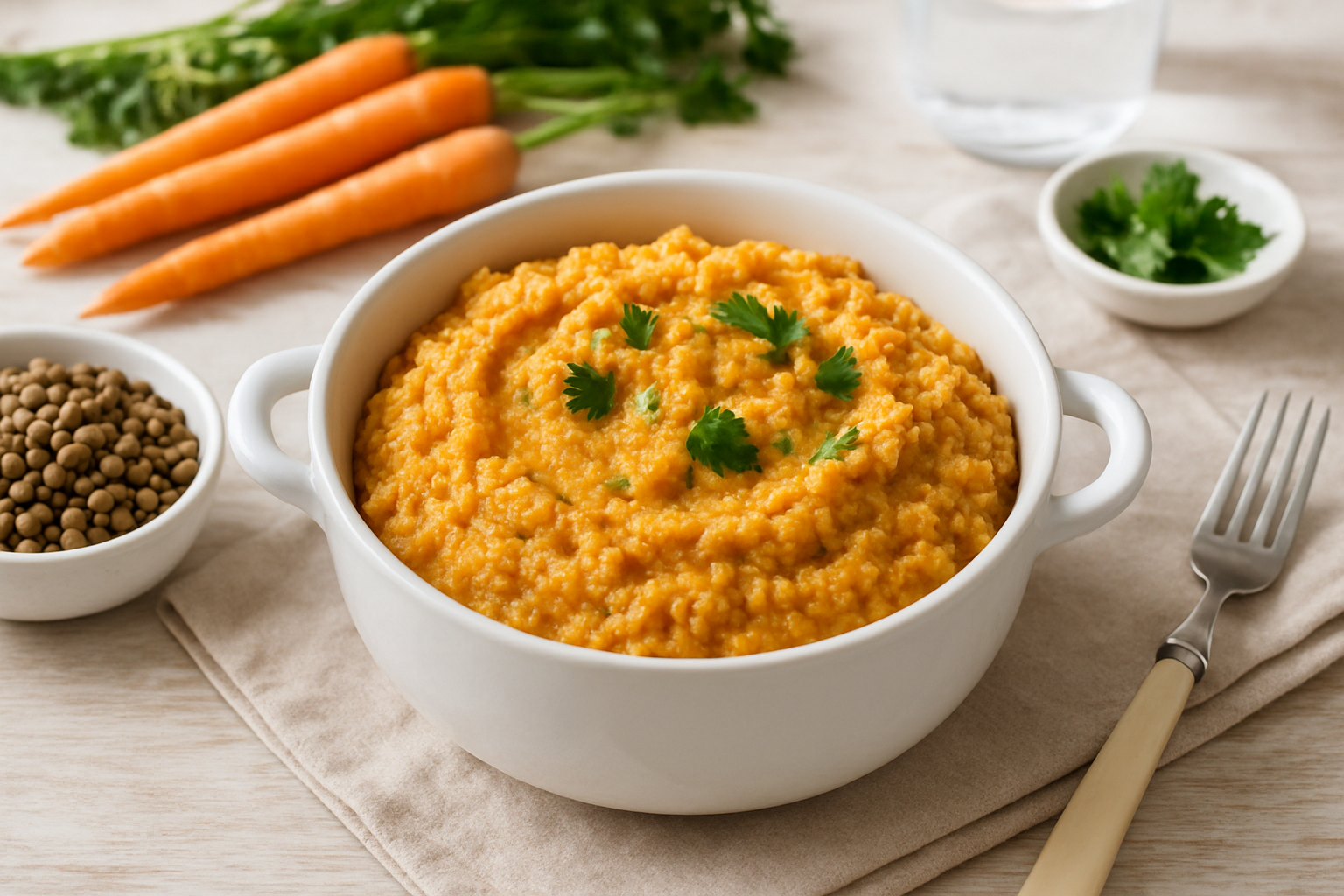
Creamy Lentil and Carrot Mash

Creamy Lentil and Carrot Mash

No ratings yet
A soft, easy-to-chew meal combining cooked lentils and carrots with olive oil and mild spices for brain-healthy nutrients, perfect for caregivers preparing meals for older adults.
Prep Time 10 minutes
Cook Time 10 minutes
Total Time 20 minutes
Servings: 2
Course: Dinner
Cuisine: American

Ingredients
  

  • 120 g brown lentils rinsed; dry weight before cooking
  • 150 g carrots peeled and chopped
  • 1 cup vegetable broth low sodium
  • 1 tablespoon olive oil extra virgin
  • 0.5 teaspoon ground cumin adds mild flavor without overpowering
  • 0.25 teaspoon black pepper freshly ground
  • 0.25 teaspoon salt optional; adjust for sodium preference

Method
 

  1. Rinse the brown lentils under cold water until clear.
  2. In a medium saucepan, combine lentils, chopped carrots, and vegetable broth. Bring to a boil.
  3. Reduce heat to low, cover, and simmer for about 10 minutes or until lentils and carrots are very soft.
  4. Remove from heat. Add olive oil, ground cumin, black pepper, and salt.
  5. Mash the mixture gently with a fork or potato masher until creamy but still some texture remains.
  6. Serve warm. Suitable for easy chewing and digestion.

Notes

This recipe combines lentils and carrots, providing fiber, plant-based protein, and beta-carotene, which support brain health. Using olive oil adds healthy fats recommended in the MIND diet. The soft texture makes it easy to chew for older adults or those with mild swallowing difficulties. Caregivers can prepare this quickly and store leftovers safely for another meal.
Tried this recipe?

Let us know how it was!
Share to Facebook
LinkedIn
Twitter
X
Reddit
WhatsApp
Email

Related:

Email me when people comment
Notify of
guest

0 Comments
Inline Feedbacks
View all comments

This site was inspired by my Mom’s autoimmune dementia.

It is a place where we separate out the wheat from the chafe, the important articles & videos from each week’s river of news. Google gets a new post on Alzheimer’s or dementia every 7 minutes. That can overwhelm anyone looking for help. This site filters out, focuses on and offers only the best information. it has helped hundreds of thousands of people since it debuted in 2007. Thanks to our many subscribers for your supportive feedback.

The site is dedicated to all those preserving the dignity of the community of people living with dementia.

Peter Berger, Editor

Share this page To

Dementia Books & Videos on Amazon:

More From Alzheimer's Weekly

Diagnosis

fMRI Displays Dementia

How do doctors “see” dementia? One way is with brain scans called MRI and fMRI. Doctors also use these scans to help see if it is Alzheimer’s, Vascular, Lewy Body or another type of dementia. An MRI offers a photo of the brain. More amazingly, an fMRI (functional MRI) can give a 3-D video of a living brain. Learn how it works.

Read More »
Dr. Oliver Sacks
Books

Alzheimer’s & The Power of Music

Music’s effect on the brain fascinated neurologist Oliver Sacks, MD. His research led him to helping people with Alzheimer’s. Watch this best-selling author share how dementia, without exception, responds to music.

Read More »
Share to Facebook
Twitter
LinkedIn
Facebook

Visit Alzheimer's Weekly On

Welcome

Alzheimer’s & Dementia Weekly was inspired by my mother’s journey with autoimmune dementia and my dad’s with Parkinson’s dementia.

Walking beside them opened my eyes to the confusion, the courage, and the deep humanity found in families and professionals caring for someone they love.

Since its debut in 2007, this site has had one clear mission:
to separate the wheat from the chaff — to highlight only the most essential articles, studies, tools, and videos from the overwhelming river of dementia-related information.
(At last count, Google receives a new post on Alzheimer’s or dementia every seven minutes.) For anyone seeking clarity or support, that constant flow can be exhausting and discouraging.

Alzheimer’s Weekly filters, translates, and explains what matters most, helping hundreds of thousands of families, clinicians, and care teams around the world make sense of the latest research and best practices.

This site is dedicated to everyone who works—often quietly and tirelessly—to preserve dignity in the community of people living with dementia.


About the Editor

With experience in dementia caregiving, public education, and Alzheimer’s-focused writing—and a professional research background shaped in what many consider one of the world’s top laboratories—I work to make complex findings clear, practical, and genuinely helpful for both families and professionals providing care.

My goal is simple:
Translate the best science into guidance that lightens the load, strengthens understanding, and helps every person with dementia live with dignity.

Peter Berger
Editor, Alzheimer’s Weekly

Free:
Alzheimer's & Dementia
Weekly Newsletter

INCLUDES BONUS BOOKLET:
15 Simple Things You Can Do to Care For a Loved One with Dementia or Memory Loss
News, Treatments, Care Tips, Diet, Research, Diagnosis, Therapies & Prevention
News to Get at the Truth

Subscribe To Our Weekly Newsletter

0
Would love your thoughts, please comment.x
()
x